


Female Infertility
There are many different types of infertility experienced by women. Many of the fertility problems can be easily treated. However, the sooner you get a diagnosis, the better your prognosis will be. In this section, you’ll find explanations for numerous female infertility disorders.
Natural conception occurs when a woman’s egg is fertilized by her partner’s sperm. In a normal female cycle each month, a woman produces a single egg, which grows and matures inside a sac of fluid within the ovary called a follicle. Various hormones control the growth and release of the egg. Once mature, the egg is released from the ovary (ovulation) and picked up by the ends of the fallopian tubes.
It then travels down the tube towards the uterus (womb). During intercourse, sperm is deposited at the cervix (neck of the womb). For pregnancy to occur, the sperm has to pass through the cervix and swim into the uterus and down the fallopian tubes. Fertilization occurs in the fallopian tube when a single healthy sperm penetrates the egg. The egg then divides into 2 cells, then 4 cells and forms an embryo which continues to grow and divide until it reaches the uterus, usually about 5 days after fertilization. At this stage it is called a blastocyst and it starts to implant in the womb lining. The empty follicle left behind after ovulation becomes a corpus luteum and produces a hormone called progesterone, which helps to support the growth of the pregnancy for the first 3 months.
If there is no pregnancy, the corpus luteum eventually stops producing progesterone and the womb lining breakaway resulting in a period or menstruation. This happens two weeks after ovulation.
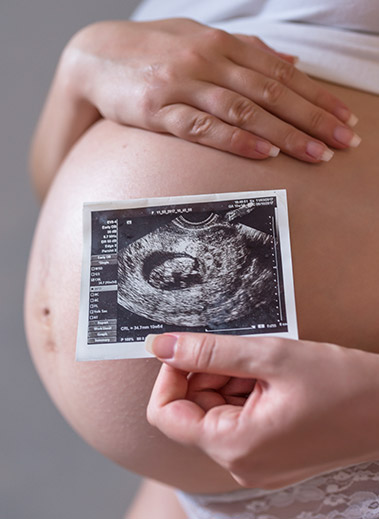
The chance of pregnancy following unprotected intercourse is about 25% per month. At the end of the first year of trying, 85% of couples will have conceived and by the end of 2 years, this figure is 95%. It is estimated that up to 15% of couples experience difficulty in conceiving either their first child (primary infertility) or a subsequent child (secondary infertility). In order to help couples conceive successfully, the first step is to try and understand where the problem lies by carrying out appropriate investigations and the second step is to use this information to decide when, and what sort of treatment, will best help that individual couple achieve a pregnancy. The information provided on this page will help you find out more about the investigations we recommend and treatments we offer.
Book An Appointment
We are at your disposal to assist you and answer all your questions.
CALL US
+30 210 777 99 20 / +30 210 691 12 00